

Training Your Mind to Stay Calm Under Pressure
Pressure is everywhere.
Whether you are standing over a five-foot putt, preparing for a major business presentation, dealing with family stress, or facing unexpected challenges, your ability to stay calm often determines the outcome.
The truth is this: calmness is not something people are born with. It is a skill that can be trained.
Elite athletes, military professionals, executives, and top performers all practice mental techniques designed to keep emotions under control when pressure rises. The good news is that you can develop the same mental toughness in your own life.
In this guide, we will break down practical and proven ways to train your mind to stay calm under pressure so you can perform better, think clearly, and build confidence in stressful situations.
Why Staying Calm Under Pressure Matters
When stress takes over, the brain shifts into survival mode.
Your heart rate increases, breathing becomes shallow, muscles tighten, and decision-making becomes emotional rather than logical.
This often leads to:
- Poor decisions
- Overthinking
- Anxiety
- Anger or frustration
- Lack of confidence
- Physical mistakes
- Mental fatigue
On the other hand, staying calm allows you to:
- Think clearly
- Make smarter decisions
- Control emotions
- Stay focused
- Improve performance
- Build resilience
- Gain confidence under stress
The ability to remain calm is one of the most valuable life skills you can develop.
Understand What Pressure Really Is
Pressure is not always created by the situation itself. Most of the time, pressure is created by how we interpret the situation.
For example:
- “What if I fail?”
- “Everyone is watching me.”
- “I cannot mess this up.”
- “If I fail, people will judge me.”
These thoughts create internal stress. One of the first steps toward staying calm is learning to recognize that pressure often comes from your own mental response, not the moment itself. Changing your mindset changes your reaction.
1. Control Your Breathing
The fastest way to calm your nervous system is through breathing. When pressure rises, breathing becomes shallow and rapid. This signals danger to the brain and increases anxiety. Instead, slow your breathing down intentionally.
A simple technique is:
- Inhale for 4 seconds
- Hold for 4 seconds
- Exhale for 6 seconds
- Repeat several times
This activates the parasympathetic nervous system and helps your body relax. Many professional athletes use breathing exercises before critical moments because they help them regain focus instantly.
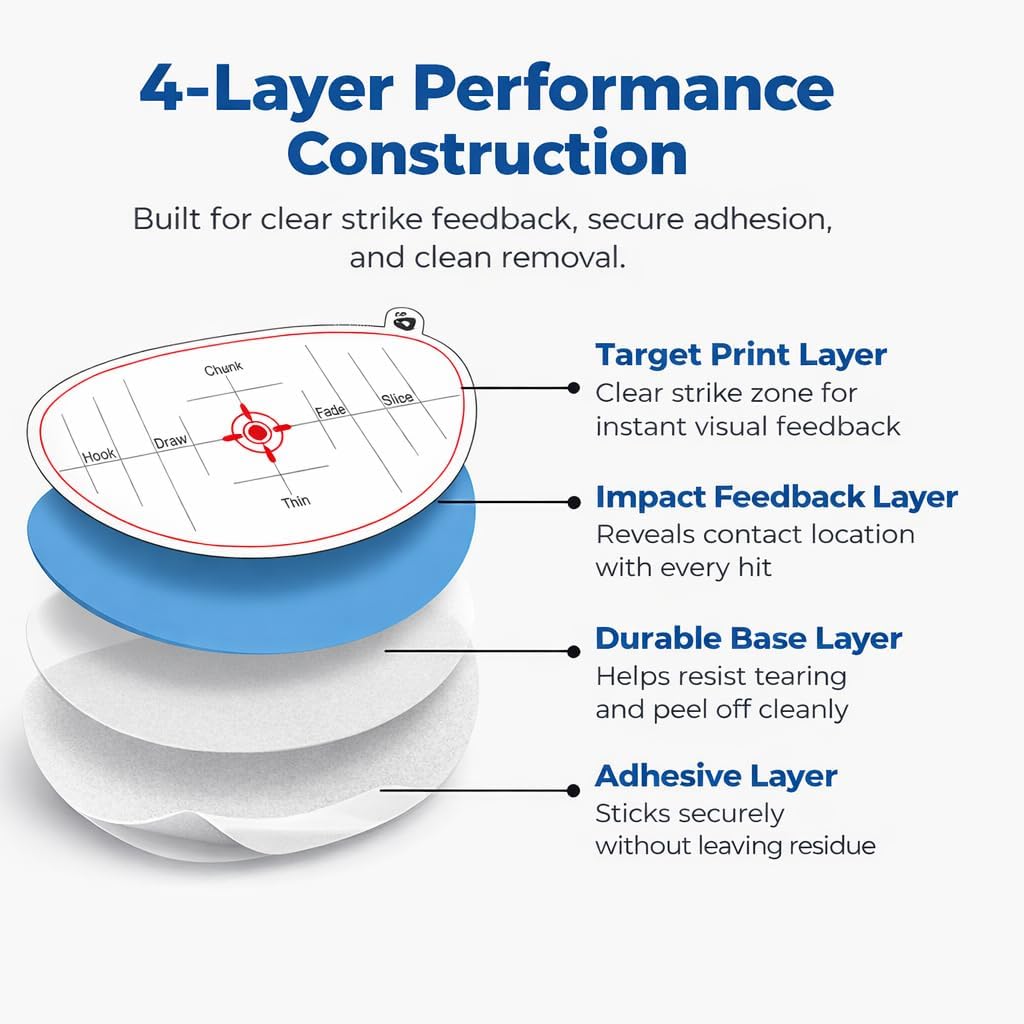
FODESAN Golf Impact Tape turns every swing into visible contact feedback. After each shot, the blue impact mark shows where the ball contacted the club face, helping golfers check swing quality, improve centered contact, and build better ball-striking feel during practice.
2. Focus on the Present Moment
Pressure often comes from thinking too far ahead. You start imagining worst-case scenarios or worrying about outcomes you cannot control. The key is to narrow your focus. Instead of thinking about everything that could happen, focus only on the next action.
For example:
- One golf shot at a time
- One sentence at a time
- One breath at a time
- One task at a time
The present moment is manageable. The future is overwhelming. High performers train themselves to stay locked into the current moment instead of spiraling into “what if” thinking.
3. Develop a Pre-Pressure Routine
Routines create familiarity and stability during stressful situations. That is why athletes use routines before free throws, golf shots, or presentations.
A simple routine could include:
- Deep breath
- Positive self-talk
- Visualize success
- Focus on one target
- Execute confidently
The brain loves patterns. When you repeat the same calming routine consistently, your mind begins associating it with confidence and control.
4. Practice Visualization
Visualization is one of the most powerful mental training tools available. Top performers mentally rehearse success before pressure situations occur.
Spend a few minutes each day imagining yourself:
- Staying calm
- Performing confidently
- Responding positively
- Handling challenges smoothly
Your brain often cannot distinguish between vividly imagined experiences and real experiences. Visualization helps build familiarity and confidence before the pressure even arrives.
5. Train Under Pressure
You cannot expect to stay calm under pressure if you never practice pressure situations. The solution is simple: simulate pressure during training.
Examples include:
- Practicing difficult golf putts with consequences
- Rehearsing presentations out loud
- Timing yourself during practice
- Creating competitive challenges
- Practicing uncomfortable situations intentionally
Pressure becomes less intimidating when it becomes familiar. Confidence grows through exposure.
6. Change Your Self-Talk
Your inner dialogue has enormous power over your emotional state. Negative self-talk creates tension and fear.
Examples include:
- “I always mess this up.”
- “I cannot handle pressure.”
- “I am going to fail.”
Replace those thoughts with calmer, more productive statements:
- “I am prepared.”
- “Stay focused.”
- “Trust the process.”
- “One step at a time.”
- “I can handle this.”
Your mind listens to what you repeatedly tell it.
Train it carefully.

Transform your backyard, garage, or basement into a personal driving range with this premium golf net. Designed to deliver the feel of a real fairway, this golf practice net combines a spacious 10x7FT hitting area with a realistic mat.
7. Accept That Pressure Is Normal
Many people panic because they think feeling nervous means something is wrong. It is not.
Even elite performers feel pressure. The difference is they do not fight it.
They accept it and perform anyway. Pressure often means you care about the outcome. Instead of fearing pressure, view it as a sign that you are pushing yourself toward growth.
8. Build Confidence Through Preparation
Confidence comes from preparation. When you know you have practiced properly, pressure loses some of its power.
Preparation includes:
- Repetition
- Skill development
- Mental rehearsal
- Planning
- Recovery and rest
The more prepared you are, the calmer you become. Preparation creates trust in yourself.
9. Learn to Recover Quickly
Nobody stays perfectly calm all the time. The goal is not perfection. The goal is recovery.
When mistakes happen:
- Reset quickly
- Avoid emotional spirals
- Focus on the next opportunity
- Learn and move forward
Mental toughness is often about how fast you recover, not whether you struggle.
10. Build Calmness Into Your Daily Lifestyle
Your overall lifestyle impacts how you handle pressure.
Things that improve mental calmness include:
- Regular exercise
- Better sleep
- Healthy eating
- Reduced caffeine overload
- Meditation or prayer
- Time outdoors
- Reduced screen stress
You cannot constantly overload your nervous system and expect calmness under pressure. Daily habits matter.
Final Thoughts
Learning how to stay calm under pressure is one of the most valuable skills you can develop in life.
Pressure will always exist.
Challenges will always appear.
Stressful moments are unavoidable.
But your response is trainable.
By improving your breathing, focus, preparation, routines, and mindset, you can develop the mental strength needed to stay composed when it matters most.
Calmness is not weakness.
It is controlled confidence.
And the more you practice it, the stronger it becomes.
FAQ: Staying Calm Under Pressure
Why do I panic under pressure?
Panic often comes from fear of failure, overthinking, and focusing too much on outcomes instead of the present moment.
Can mental toughness be trained?
Yes. Mental toughness improves through repetition, visualization, pressure training, and consistent mindset work.
How do athletes stay calm during competition?
Athletes use routines, breathing exercises, visualization, and repetition to remain focused under stress.
What is the fastest way to calm down?
Slow, controlled breathing is one of the fastest ways to reduce stress and regain focus.